
RESEARCH PROGRAMS
From genetic code to neural circuits to metabolic health
We investigate how the hypothalamus develops, interprets internal signals, and adapts to medicines and the environment. Our goal is to explain why appetite control fails and identify precise ways to restore it.
OUR RESEARCH FRAMEWORK
01 Start with a human problem
Childhood obesity or antipsychotics' metabolic effects
02 Define the mechanism
Genes, cell fate, receptors, channels, and circuits
03 Test the physiology
Feeding, energy balance, and behavior
04 Find a therapeutic opening
A precise point where harmful biology may be interrupted
Why do rare genetic variants cause severe childhood obesity?
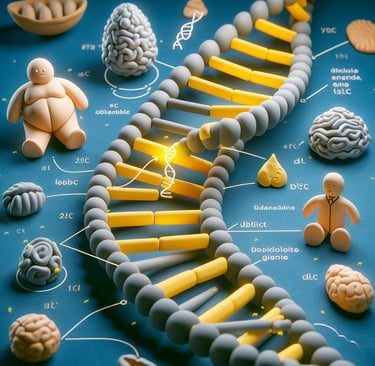
A small change in DNA can alter how the hypothalamus develops, how appetite signals are interpreted, and how the body maintains energy balance throughout life.
01 GENES & DEVELOPMENT
Why do rare genetic variants cause severe childhood obesity?
Human genetics
CRISPR models
Single-cell multiome
We recreate human variants in mice, map cell-state changes with single-cell transcriptomic and multiomic methods, and connect molecular changes to neural activity, feeding, glucose control, and susceptibility to diet-induced obesity.
Neural development
Metabolic physiology
Children with rare obesity-associated variants can develop extreme hunger and rapid weight gain early in life. Understanding the causal biology is essential for moving from a genetic diagnosis to a mechanism-based treatment.
Explore related discoveries...

PROGRAM 01
WHY IT MATTERS
HOW WE STUDY IT
WHAT WE ARE LEARNING
Our studies identify developmental regulators, including OTP, that establish and maintain melanocortin neuron identity. This work shows how early changes in neural identity can reshape adult metabolic risk.
Why do antipsychotic drugs disrupt appetite control?
Antipsychotic medicines can be life-changing, yet some also produce intense hunger, rapid weight gain, and diabetes risk. We investigate where psychiatric treatment and metabolic biology intersect.
02 MEDICINES & METABOLISM
Why do antipsychotic drugs disrupt appetite control?
MC4R signaling
Fiber photometry
Drug-induced obesity models
We combine clinically relevant dietary drug exposure, engineered mouse models, fiber photometry, metabolic phenotyping, receptor pharmacology, and electrophysiology to trace drug action from molecular signaling to feeding behavior.
Electrophysiology
These metabolic side effects can compromise long-term health and contribute to treatment discontinuation. The goal is not to replace psychiatric therapy, but to preserve its benefits while protecting long-term metabolic health.
Explore related discoveries...


PROGRAM 02
WHY IT MATTERS
HOW WE STUDY IT
WHAT WE ARE LEARNING
Our work identifies the MC4R–Kir7.1 signaling partnership as an important convergence point for clozapine-induced hyperphagia and weight gain, revealing a potential path toward mechanism-based protection.
Which serotonin circuits can suppress appetite safely?
Serotonin can reduce food intake, but raising serotonin throughout the body can also cause serious adverse effects. The challenge is to isolate the beneficial circuit from the harmful ones.
03 CIRCUITS & BEHAVIOR
Which serotonin circuits can suppress appetite safely?
Receptor genetics
Circuit mapping
Calcium imaging
We use receptor-specific genetics, intersectional circuit mapping, in vivo neural recording, chemogenetic and pharmacological perturbations, and quantitative feeding assays to define the responsible cells and pathways.
Spatial transcriptomics
Feeding behavior
Past serotonin-based weight-loss therapies showed that appetite can be suppressed, but widespread serotonergic activation also produced unacceptable risk. Circuit-level precision may allow us to retain appetite suppression without globally activating the serotonin system.
Explore related discoveries...


PROGRAM 03
WHY IT MATTERS
HOW WE STUDY IT
WHAT WE ARE LEARNING
We identified a serotonin 1B receptor circuit that suppresses appetite by acting through hypothalamic AgRP neurons, helping separate a specific feeding pathway from serotonin’s broader physiological actions.
We connect molecular mechanisms to whole-body physiology.


Genetic models
ONE INTEGRATED PLATFORM
Recreate human variants and manipulate defined neural populations.
Cell-state maps
Resolve transcriptional and epigenomic changes at single-cell resolution.
Circuit function
Measure and perturb neural activity in behaving animals.
Metabolic outcomes
Quantify food intake, energy expenditure, glucose control, and body weight.
WORK ACROSS SCALES
Bring your question. Learn the tools to answer it.
Trainees develop projects that connect genes, cells, circuits, and physiology while building the independence to lead their own scientific programs.